Showing posts with label Coconut. Show all posts

Sunday, July 21, 2013

Jenji Gaasi


Sweet crab and a spicy coconut gravy; it shouldn't work, the spices should overpower the delicate flavour of the crab...bah that rubbish, this is wonderful and easy way of cooking crab, with the coconut base balancing out the sweetness and the spice to create this wonderful chemistry of flavour. This is a Manglorean dish and is best had with plain streamed rice. I love crab, especially cutting into it and extricating that wonderful meat. I also prefer to cook it with the shell, as it protects the meat from the heat through the slow cooking process. The dish takes around 40 minutes of preparation and 20 minutes of cooking.

Ingredients
  • 250 g blue crab, cleaned and cut into large chunks
  • 1 medium onion, finely chopped
  • 1 inch ginger, roughly chopped
  • 2 cloves garlic, roughly chopped
  • 1 medium tomato, chopped into large chunks
  • 2 red chilies, reconstituted in hot water
  • 1 thumb sized piece of tamarind
  • 1 tsp fenugreek seeds
  • 1 1/2 tsp coriander seeds
  • 1 tsp cumin seeds
  • 6 peppercorns
  • 1 star anise
  • 1/2 cup shredded coconut
  • 1/2 tsp turmeric powder
  • salt to taste
  • 1 tbsp vegetable oil
  • 1/2 cup water
Method
  1. Wash the crab, and sprinkle with salt and turmeric. Be restrained with the salt, as the crab will naturally be a little salty. Rub the turmeric and salt into the crab chunks.
  2. Dry roast the peppercorns, coriander sees, star anise and cumin together, until they release their aroma. Keep stirring it around to prevent the cumin from burning.
  3. Add the roasted spices to the ginger, garlic, fenugreek seeds, red chilies, coconut and tamarind, add a little water and grind into a thick and smooth paste.
  4. Heat the oil in a pan, and add the onions. Fry until translucent.
  5. Add the tomatoes and fry till it softens.
  6. Add the ground paste and stir around. Cook the paste until the oil starts to separate.
  7. Add the crab pieces and toss around so that the paste covers the crab. Add the water and salt to taste and cook covered for 8-10 minutes, till the crab cooks through.
  8. Once done, take off the heat and let it rest for a few minutes.
  9. Serve up over a base of plain rice.


Sunday, May 5, 2013

Thai Green Curry with Fish


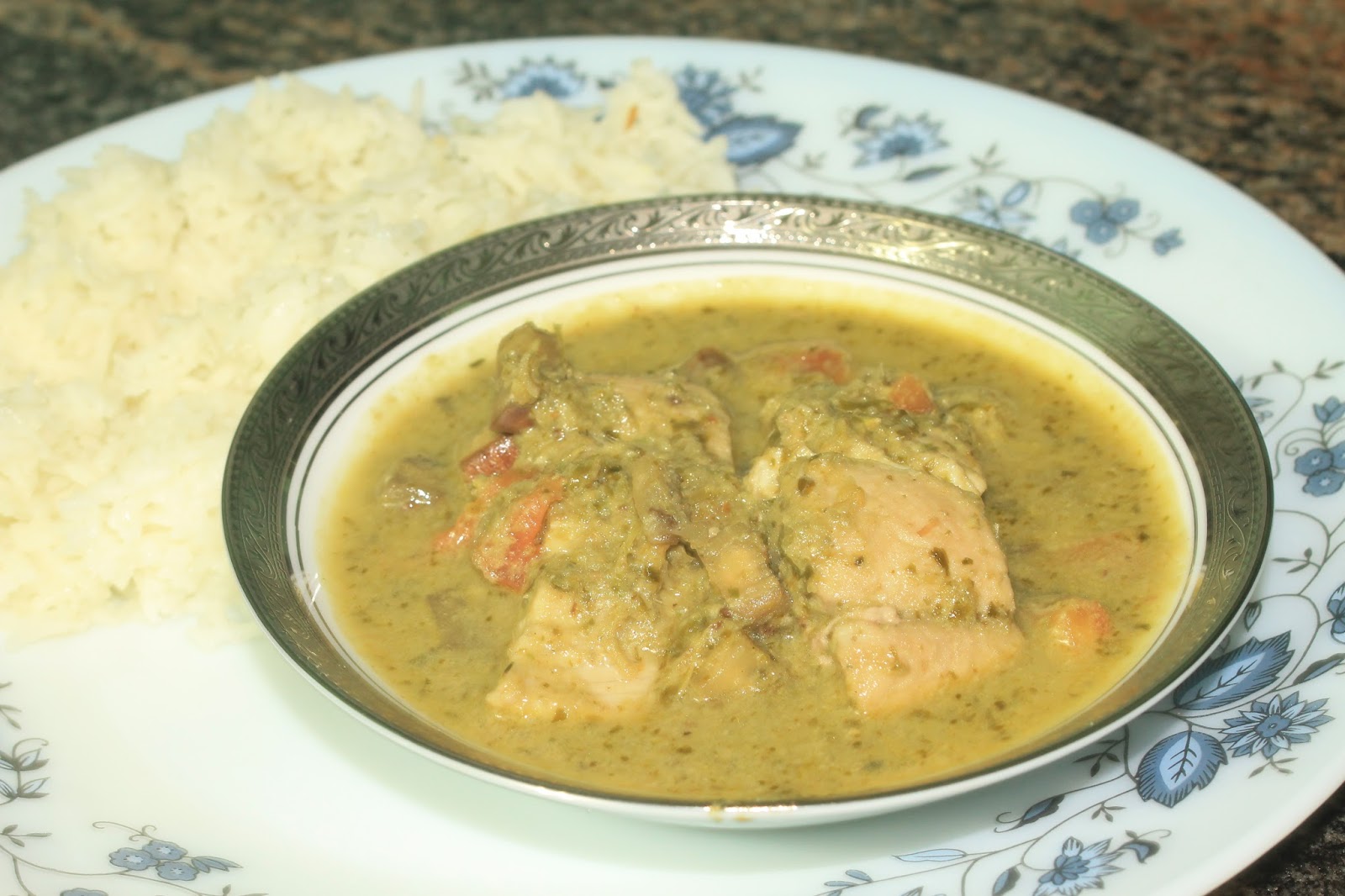
I've been looking to use this bottle of thai fish sauce that's been lying at the back of the pantry, but never really had the entire suite of ingredients available. This time though, I finally found some fresh lemon grass, and decided to make this curry for dinner. I made it with fish, but this curry can be made with diced chicken as well, and this recipe can be adapted into a vegetarian version with paneer or tofu and the use of light soy sauce instead of the fish sauce. I had some Malabar Trevally fillets left over, and used that fish. With coconut based stews I prefer to use a bland white fish as the flavours of the coconut and the spices infuse into the flesh of the fish. In case Malabar Trevally is unavailable, you can use Basa, Cod or any other similar white fish. The green curry paste can be made in advance and keeps well for at least 3 days in the fridge.


Ingredients

Green Curry Paste
  • 1 tsp cumin seeds
  • 1 tsp coriander seeds
  • 1 tsp peppercorns
  • 1 large bunch coriander leaves, shredded
  • 1 lemon grass stalk (white part), chopped
  • 2 inch ginger root, roughly chopped
  • 1 inch galangal (optional)
  • 1 tbsp fish sauce
  • 1 medium shallot, chopped
  • 3 cloves garlic, chopped
  • 3 long green chilies (1 deseeded), chopped
  • 1 tsp salt
  • 3-4 kaffir lime leaves (or any citrus leaves), shredded
  • 2 tbsp oil
  • juice of half a lime with zest
Green Curry
  • 300 g Malabar Trevally filets (skin-on) cut into bite sized pieces
  • 1 small purple aubergine, chopped
  • 1 medium tomato, chopped
  • 2 cups thin coconut milk
  • 3 tablespoons of the Green Curry Paste (above)
  • 1 lemon grass stalk (green parts)
  • salt to taste
  • 1 tbsp oil
Method
Green Curry Paste
  1. Roast the cumin, peppercorns and coriander seeds in a pan to release its aromatic oils.
  2. Once cooled, pound it in a pestle into a fine powder.
  3. Add all of the remaining ingredients to a food processor along with the spice powder.
  4. Grind with a little water to create a thick paste. 
  5. Remove and store away in an airtight container.
  6. Thin the paste remaining in a food processor with water and keep aside.
Green Curry
  1. Marinate the fish pieces in the thin paste liquor for at least 3 hours, or use 1 tsp of the green curry paste with half a cup of water to create a thin marinade.
  2. Heat the oil in a pan and add the aubergines. Cook until the aubergines soften.
  3. Add the green curry paste and lower the heat. Cook the paste until the oil starts to leave the paste.
  4. Add the tomatoes and let it stew and soften.
  5. Add the coconut milk, salt and lemon grass stalk and stir around to create a thin coconut stew.
  6. Add the fish pieces, skin side up and the marinade.
  7. Raise the heat, and once the stew stars to boil lower the heat. Cover and cook for around 10 minutes, or until the fish is completely cooked through.
  8. Serve with plain rice, with a little lime.

Saturday, May 4, 2013

Sri Lankan Fish Curry


This bright yellow curry is sweet and lightly spiced, with a focus on the individual flavours of each spice. Some variants of it use gambooge or tamarind juice to add a little sourness, but I prefer to add lemon grass for that light lemony flavour. I had this curry in Mirissa with tuna and boiled rice and was amazed by its light playful melding of sweet coconut with bitter coriander. A vegetarian version of the curry can be made by substituting the fish with okra (lady's finger) and frying the okra with the onions prior to stewing it in the coconut milk. 

For the fish, this curry is typically made with thick cut tuna steaks, but I preferred to use Malabar Trevally. Malabar Trevally is a firm white sea fish with a fairly bland taste. I preferred this fish to the strong flavoured tuna as the bland fish acts as a great palette for the spices of the curry. You can use Basa or a similar firm white fish, but try to get skin-on filets as it will prevent the fish from disintegrating while stewing.

Ingredients

  • 300 g Malabar Trevally filet, with skin, cut into large chunks
  • 1 star anise
  • 1 tsp coriander seeds
  • 1 tsp cumin
  • 2 cups thin coconut milk
  • 1 inch cinnamon
  • 1 small onion, chopped
  • 1 tomato, chopped
  • 1 stalk lemon grass
  • 1 pandan leaf (or substitute with 1 bayleaf)
  • 1 green chili, slit and chop into large chunks
  • 1 handful curry leaves
  • 1 tbsp vegetable oil
  • 1 tbsp turmeric powder
  • salt to taste
Method
  1. Add some salt and half the turmeric to the fish and rub it into the fish. Let it aside for an hour.
  2. Heat the coriander, cumin and star anise in a pan and roast lightly to release its aroma.
  3. Remove the star anise and pound the cumin and coriander into a fine powder.
  4. Heat the oil in a pan and add the onions. Sweat down the onions till it turns translucent. 
  5. Add the curry leaves, green chilies and the coriander-cumin powder. Fry lightly and add the chopped tomato.
  6. Once the tomato has cooked add the cinnamon, coconut milk and star anise and lower the flame.
  7. Bash the lemon grass with the back of a spatula, and add it to the pan along with the turmeric, pandan (bayleaf), fish pieces and salt to taste. Stir it lightly to get the turmeric to evenly diffuse.
  8. Cover and let it stew on a low flame till the fish is cooked.
  9. Serve up with boiled rice or appams. 

Sunday, February 17, 2013

Kanom Krok


Little thai dumplings that are crisp on the outside and gooey on the inside, with a sweet coconut milk jelly filling. I had these in thailand, stuffed with crisp bacon and scallions. These little dumplings need a special pan, called an appa pan, a flat bottomed pan with small circular indentations for batter (like an aebleskiver pan), and with the amount of coconut milk in, are quite easy free to make as it slips off the pan. It needs around 30 minutes of preparatory time and 4-5 minutes to cook. They're great by themselves, or can be served with a little sweet chili sauce to add some heat.

Ingredients
  • 6 tbsp rice flour
  • 2 tbsp uncooked rice
  • 2 tbsp grated coconut
  • 1 tbsp cornflour dissolved in 1/2 cup water
  • 5 cups coconut milk
  • 3 tbsp sugar
  • 1 tsp salt
  • chopped cilantro to garnish (or finely chopped scallions, ginger or bacon bits)
Method
  1. Heat 1 cup of the coconut milk with the cornflour water mixture and 2 tbsp sugar. Heat on a low flame and cook until it thickens to create a sweet thick coconut jelly. Set aside and let it cool.
  2. Grind the grated coconut and uncooked rice together into a fine mixture.
  3. Add the remaining coconut milk, sugar, rice flour and salt and blend it with the ground rice mixture to create a thin batter.
  4. Heat the appa pan on a low flame and pour spoonfuls of the batter into each indentation, making sure that it remains just below the rim of each indentation. I used a non-stick pan and thus didn't need to add any oil to the pan, but in case your pan isn't non-stick, brush some oil over it prior to pouring the batter. 
  5. Add a small spoonful of the jelly to the top of the batter and garnish lightly with the chopped cilantro.
  6. Cover and let it cook for around 3-4 minutes on a low flame, until the bottom of each dumpling half is a crisp brown.
  7. Take out each dumpling half with a spoon and keep aside.
  8. While still hot, place one half over another to create a circular dumpling and leave aside. Do this while hot as the jelly will act as a glue and keep the dumpling halves together.
  9. Keep stirring the batter prior to pouring as the ground rice will settle to the bottom.
  10. Serve hot, but be aware that the jelly will be piping hot. So avoid gulping down or biting directly into the dumpling. Gin Dee Dee

Saturday, December 15, 2012

Meen Moilee

One of my favourite curries, especially with appams as it adds some bite to cut the sweetness of the appam. Incredibly easy to make, with just a hand-full of spices and loads of coconut milk. It can be made with any tender white meat, like chicken or a firm white fleshed fish, like pomfret, bass. I made this with fillets of Emperor fish, which added a sweetness to the entire dish. You can have this curry with plain rice or appams, the recipe for which can be found here: Appam with Nadan Mutta Curry
Ingredients

  • 200 g firm white fish fillets or 400g white fish steaks; cut into bite sized pieces
  • 1 cup thick coconut milk (first extraction)
  • 1/2 cups thin coconut milk (second extraction)
  • 2 cloves
  • 1 bay leaf
  • 1 inch cinnamon
  • 4 green cardamoms
  • 2 split green chilies
  • 1 inch ginger
  • 4 cloves garlic
  • 1 onion finely chopped
  • 1 tomato cubed
  • 1 sprig curry leaves
  • 1 tbsp lime juice
  • 2 tbsp vegetable oil
  • 1 tbsp turmeric
  • salt and pepper to taste
Method
  1. Wash the fish and add some salt and half the turmeric to it. Coat the fish evenly with the turmeric and salt and set aside for at least 30 minutes.
  2. Crush the ginger and garlic together into a thick paste.
  3. Heat 1 tbsp of oil in a flat bottomed pan and add the fish. Lightly fry the fish till it turns brown around the edges and remove from the oil.
  4. Add the cloves, cardamom, curry leaves and cinnamon and lightly fry it to release its aroma. Add the garlic-ginger paste, onions and green chilies, and fry till the onions turn translucent. 
  5. Then add the tomatoes and cook until they turn tender. Then add the thin coconut milk, bay leaf and fish, and let it cook on high heat for around 4 minutes.
  6. Add the remaining turmeric, salt and pepper to taste and lower the heat. Let is stew covered for another 5-7 minutes, so that the flavours meld together.
  7. Now add the thick coconut milk and let it simmer on a low heat for 3 minutes before taking it off the heat.
  8. Add the lime juice after taking it off the heat and let it sit aside covered for 10 minutes before serving.

Saturday, November 3, 2012

Appams with Nadan Egg Masala

There's nothing quite like tucking into crisp appams with a sipcy egg curry on a cold wet afternoon. I've been craving appams ever since Nilam decided to flood Bangalore, and while I'm making these on an overcast, but dry, afternoon, I'm telling myself its the sentiment that counts.

The accompaniment is simple enough, a kerala style dry egg masala called Nadan Mutta Roast, but appams are great by themselves with a little sugar or with a coconut based stew. 


Appams

Ingredients

  • 2 cups rice flour
  • 3/4 cup cooked rice
  • 2 1/4 cups water
  • 1 cup coconut milk
  • 1 tsp dry yeast
  • 1/2 cup lukewarm water
  • 4 tbsp sugar
  • salt to taste
Method

  1. Dissolve the yeast in the lukewarm water and leave it aside to activate and turn frothy
  2. Mix the rice flour, 2 cups water and coconut milk together.
  3. Grind the cooked rice with 1/4 cup water to make a thick and smooth paste.
  4. Add the paste to the rice flour mix, and run the mix through a food processor to create a thin and consistent batter.
  5. Add the yeast-water and sugar to the batter and set aside, covered, in a warm place for at least 2 hours
  6. After the batter has risen, add some salt and stir the batter once.
  7. Heat an appa-chetti and pour one ladle full of batter, swirl it around to fan out the appam and cover and let it cook on a low flame for 2 minutes.
  8. Once the appam is cooked, with the underside turning brown, pull it off the appa-chetti and dig in. With the amount of coconut in there is should just slip off the appa-chetti.
  9. With respect to the appa-chetti, I used a non-stick chetti, but its just as easy to make it with a flattish kadai/wok with a lid. Just remember to add a drop of oil and swirl that around the kadai if you're using a non-stick one.
Nadan Mutta Roast (Kerala style Egg Masala)

Ingredients
  • 3 hard boiled eggs
  • 1 chopped onion
  • 2 chopped tomatoes
  • 1/2 cup water
  • 6-7 curry leaves
  • 1 chopped green chili
  • 3 cloves garlic
  • 1/2 inch ginger, chopped
  • 1 tsp mustard seeds
  • 1/2 tsp garam masala
  • 1 tsp coriander powder
  • 1 tsp red chili powder
  • 1 tsp ground pepper
  • 1 tsp turmeric powder
  • 1 tbsp vegetable oil
  • salt to taste
Method
  1. Halve the hard boiled eggs.
  2. Mix the garam masala, coriander power, pepper, turmeric and red chili power together with some water to make a thick paste.
  3. Heat the oil in the pan and add the mustard seeds.
  4. Once they stop crackling, add the ginger, garlic and green chills, and fry for a minute.
  5. Add the onion and sweat them out till they turn translucent.
  6. Add the curry leaves and let them splutter before adding the tomatoes and spice paste.
  7. Stir the mixture so that the spice paste evenly coats the tomatoes and let them soften.
  8. Add some water, salt to taste and reduce the heat and cover to let the masala stew.
  9. Once the tomatoes have softened and the masala is pulpy, add the eggs, pour the masala over them and cover and cook for a minute on a low flame.
  10. Stir the egg curry once and dry it out uncovered if a little wet, and serve up with the appams.